Types of solar battery systems
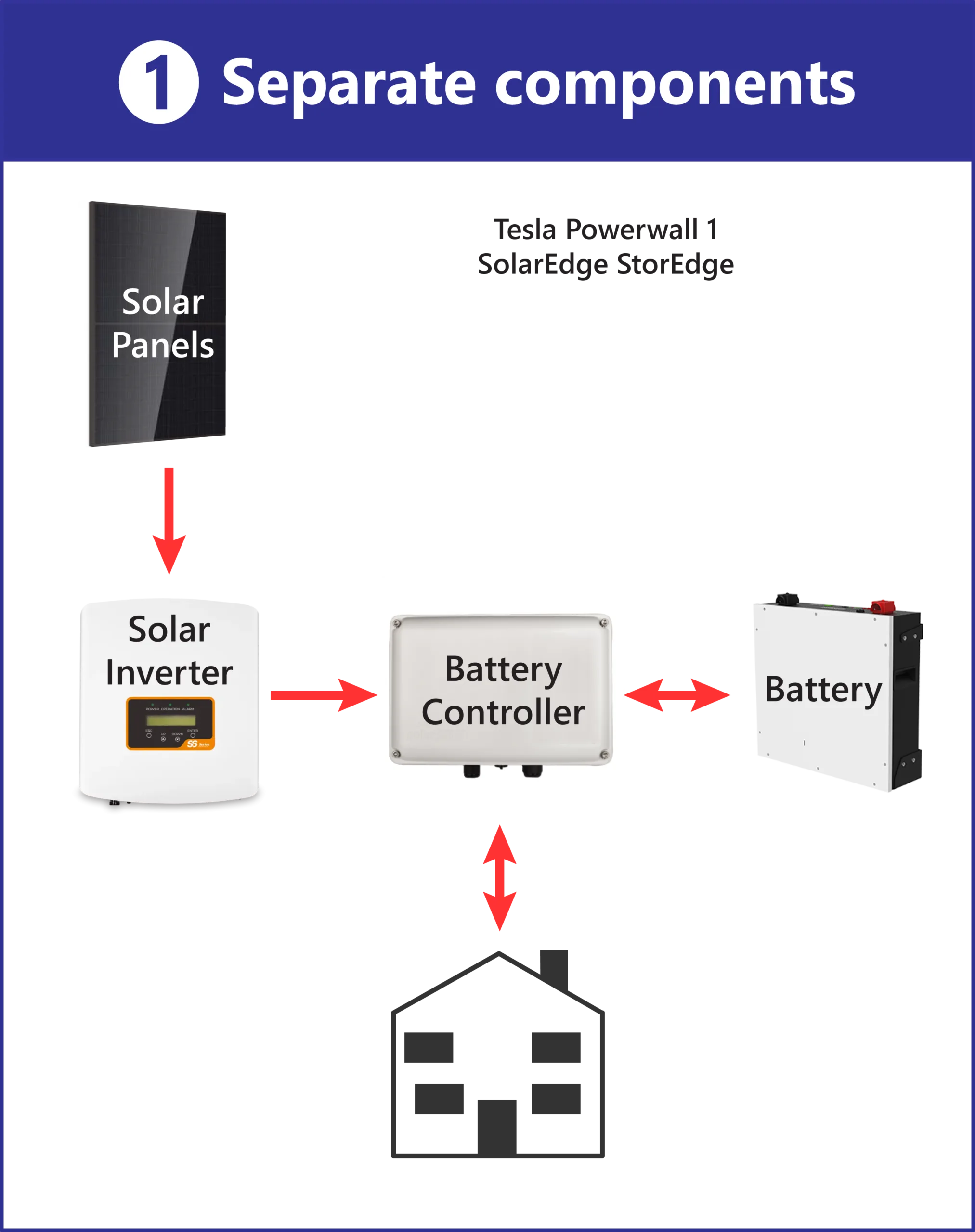
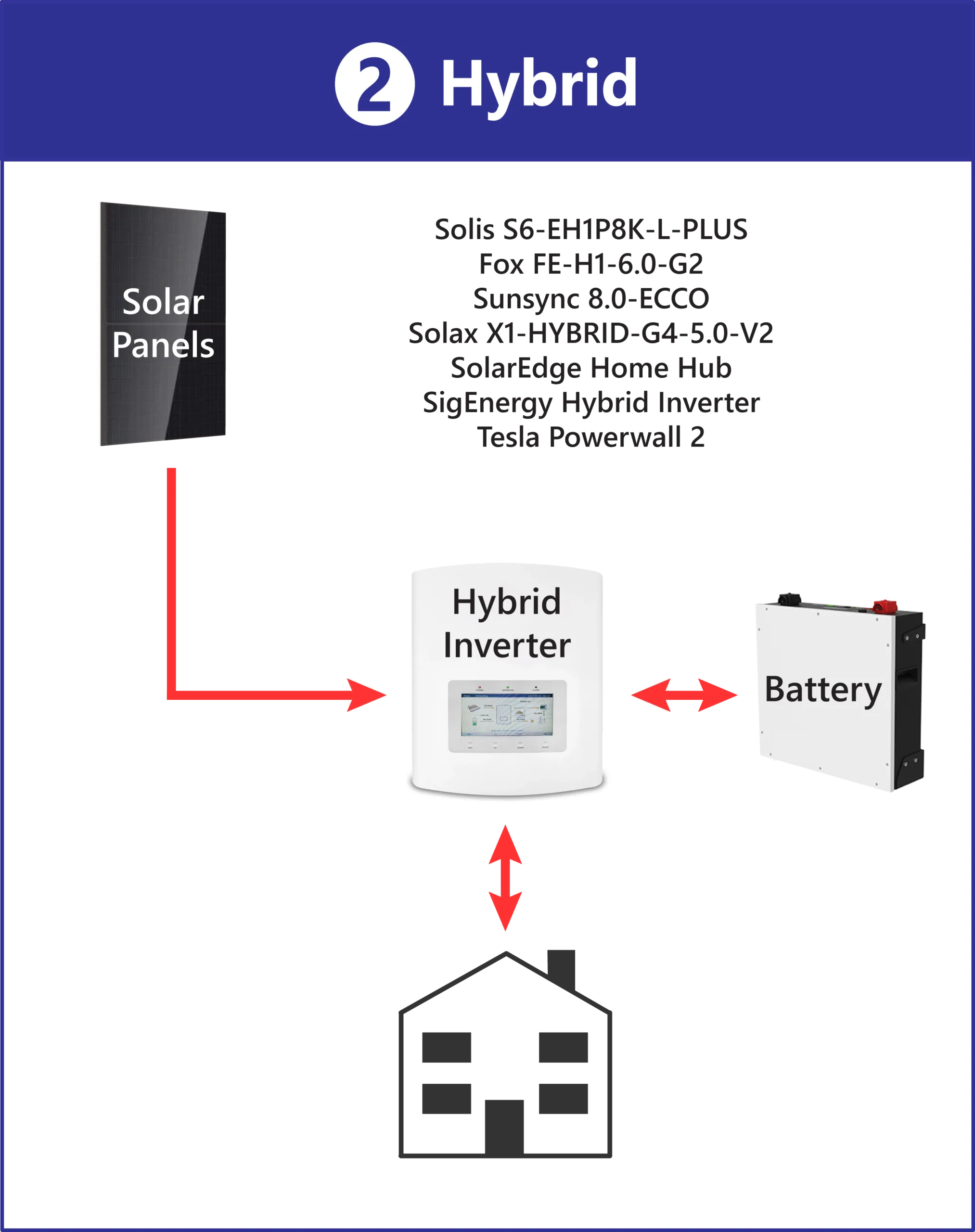
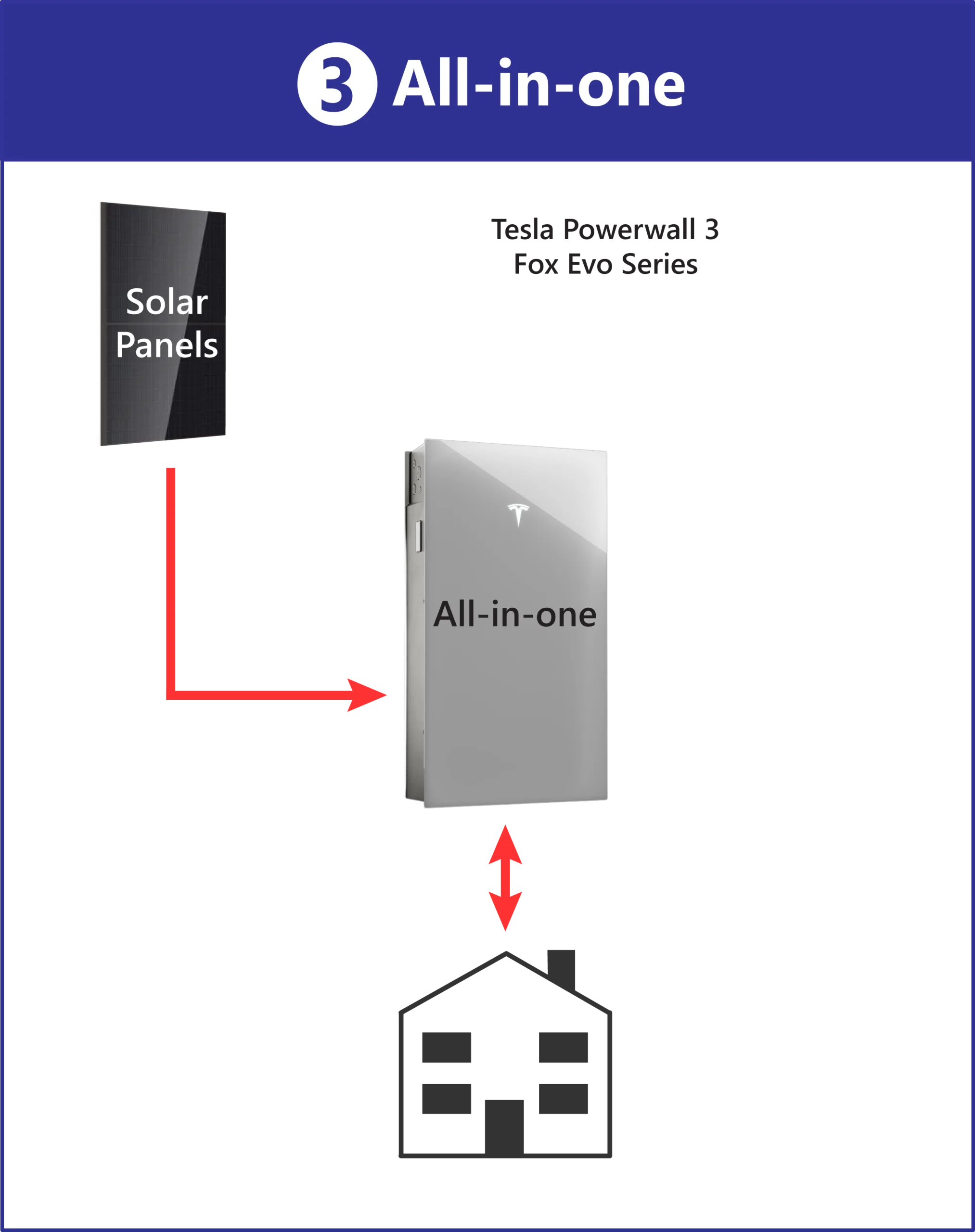
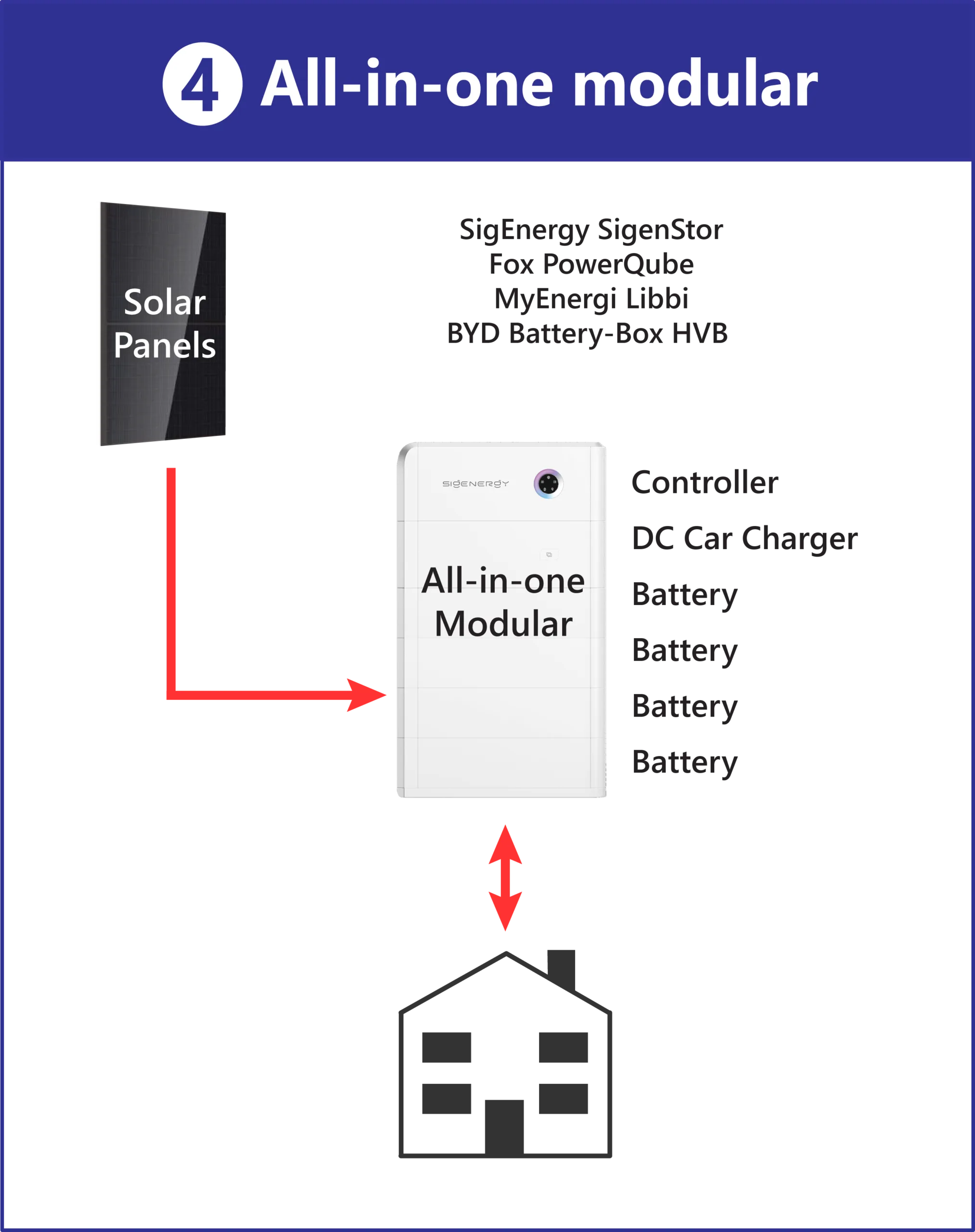
Battery systems can be categorised as separate components, semi-integrated (also known as hybrid) or fully integrated (also known as all-in-one). Sometimes it becomes confusing since some manufacturers may classify their system as all-in-one, but it doesn’t include the solar inverter. Some all-in-one systems can also be modular – the batteries, charge controllers, car chargers are added into a neat stack, so the components can easily be replaced.
Modular all-in-one appears to be where many companies are moving towards, since you have the benefit of a tidy expandable battery pack along with the benefits of easily replaceable parts. SigEnergy, Fox, MyEnergi and BYD already have modular all-in-one systems. SolarEdge are launching one in 2026.
See below for the advantages and disadvantages of hybrid, all-in-one and modular all-in-one home battery systems.