
Solar storage overview
What is DC & AC?


Offgrid vs Grid-tied
Offgrid systems are becoming much more popular over time, even providing offgrid capability for the entire house. In the UK, fully offgrid systems typically need a backup generator and/or wind turbines.
Many modern home battery systems can be installed as completely offgrid or grid-tied (or both with auto/manual switch over). Some home battery systems can be permanently in offgrid mode.
Being grid-tied means you can sell excess electricity back to the National Grid and use the National Grid in the winter, when there may not be enough solar energy.
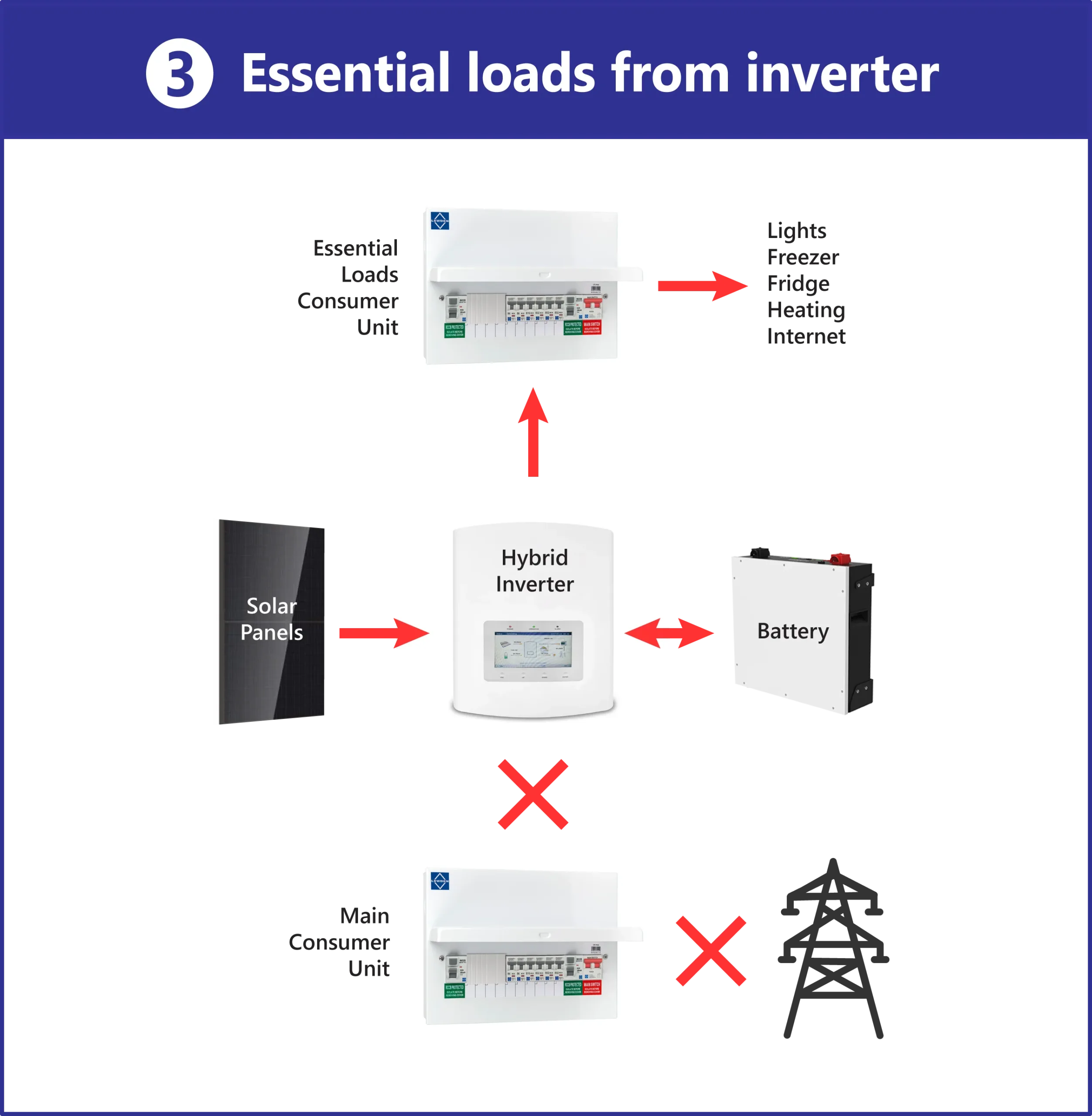
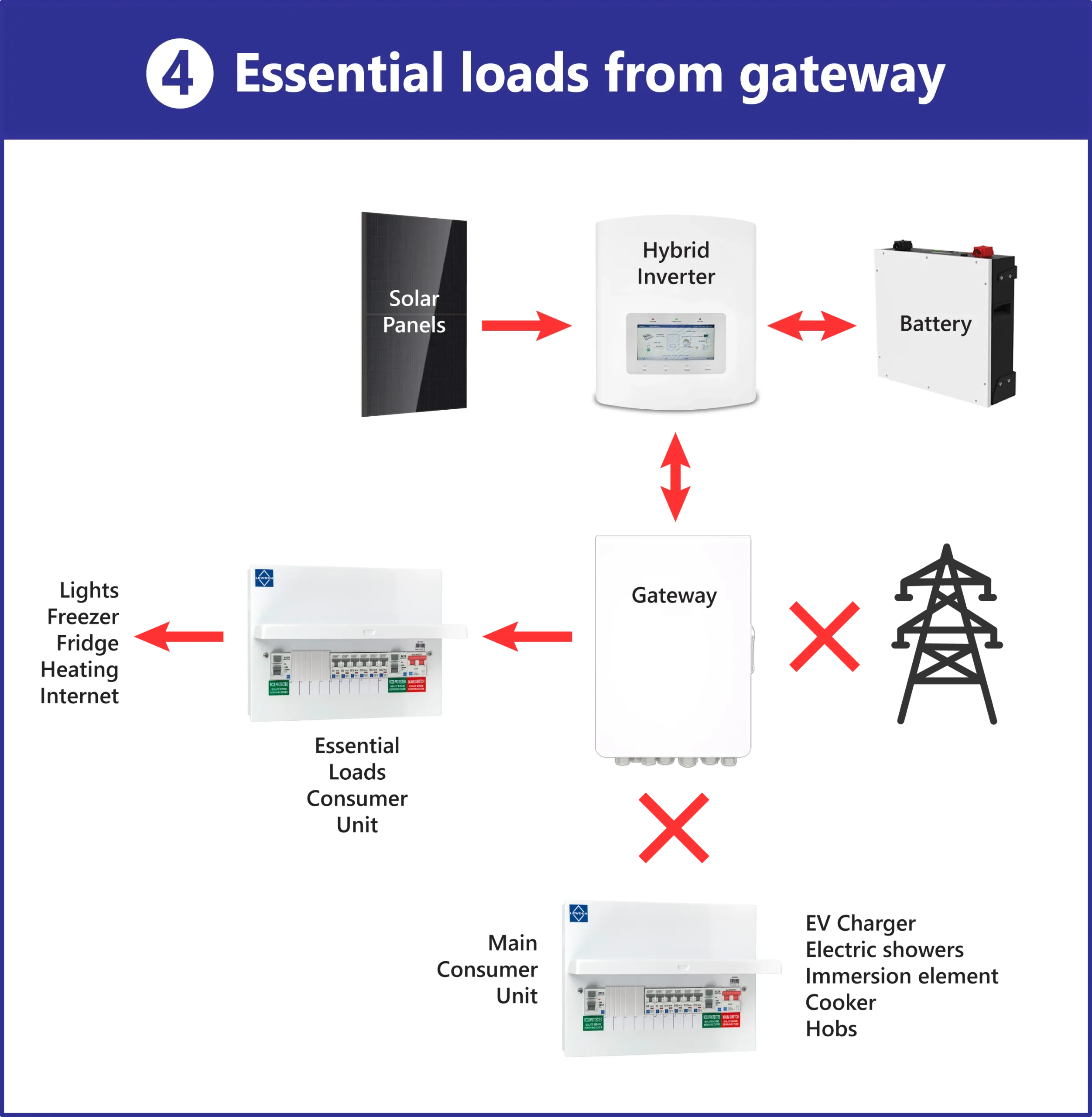
A “backup gateway” is normally installed between the home and the grid to allow offgrid functionality.
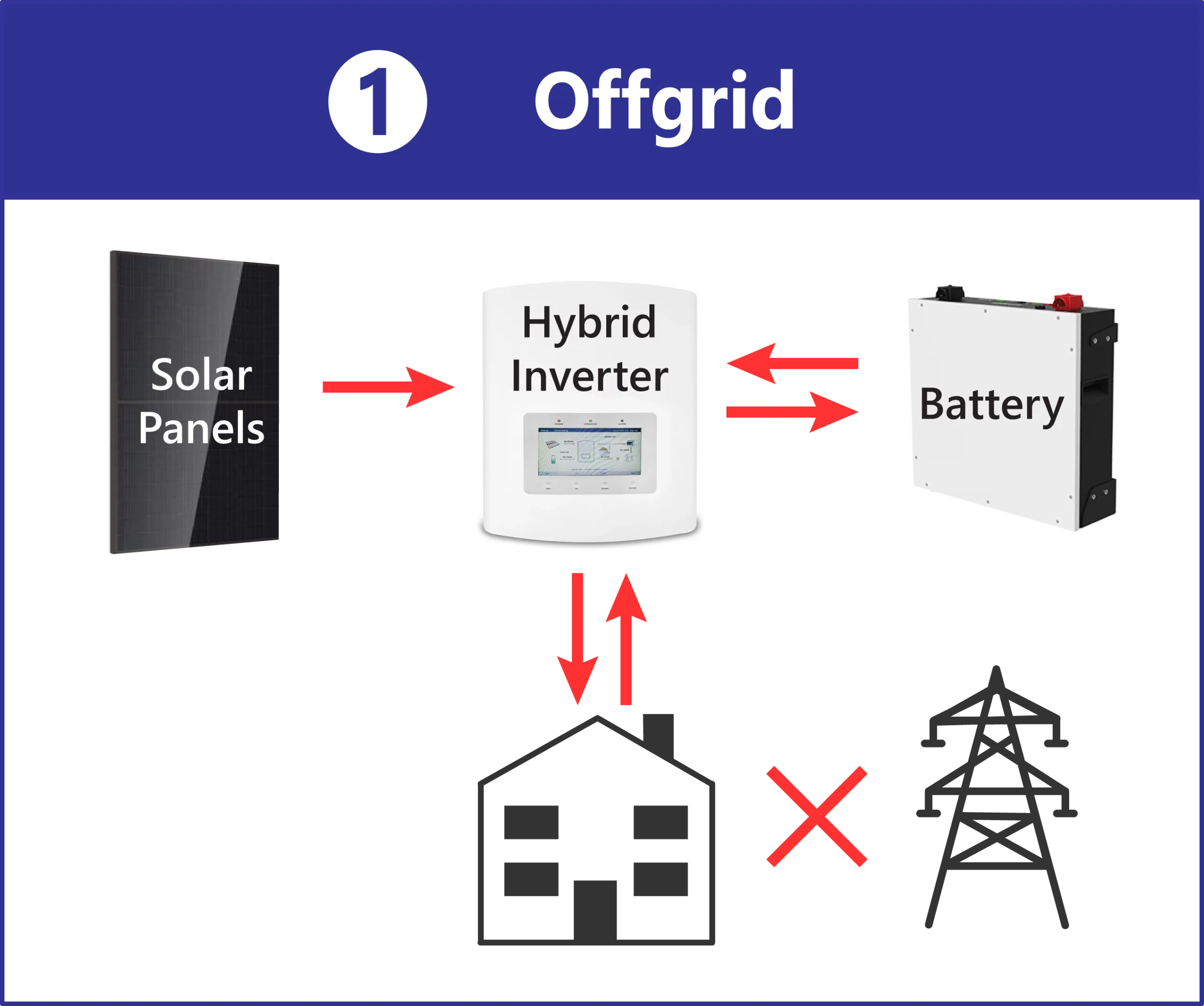
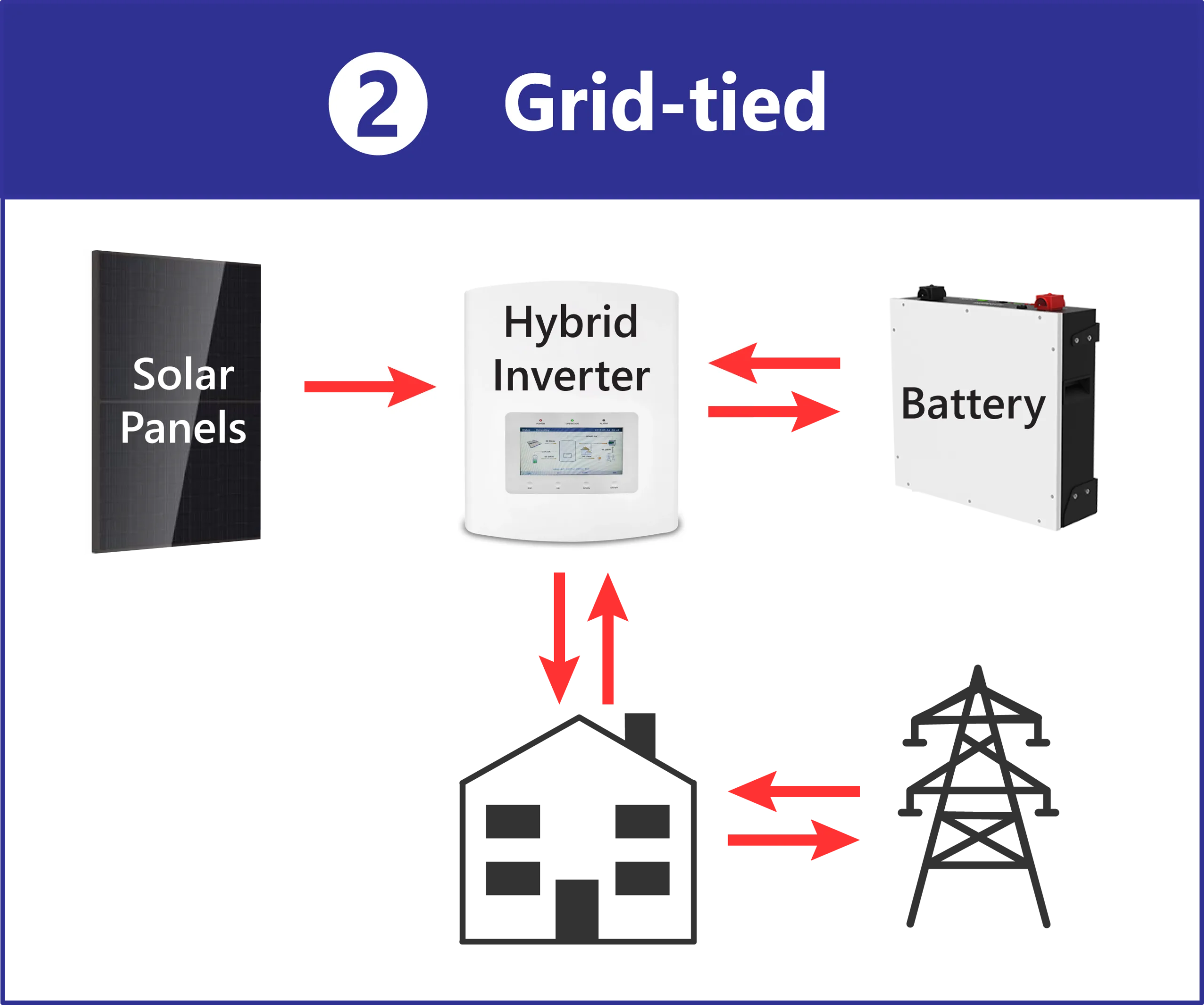
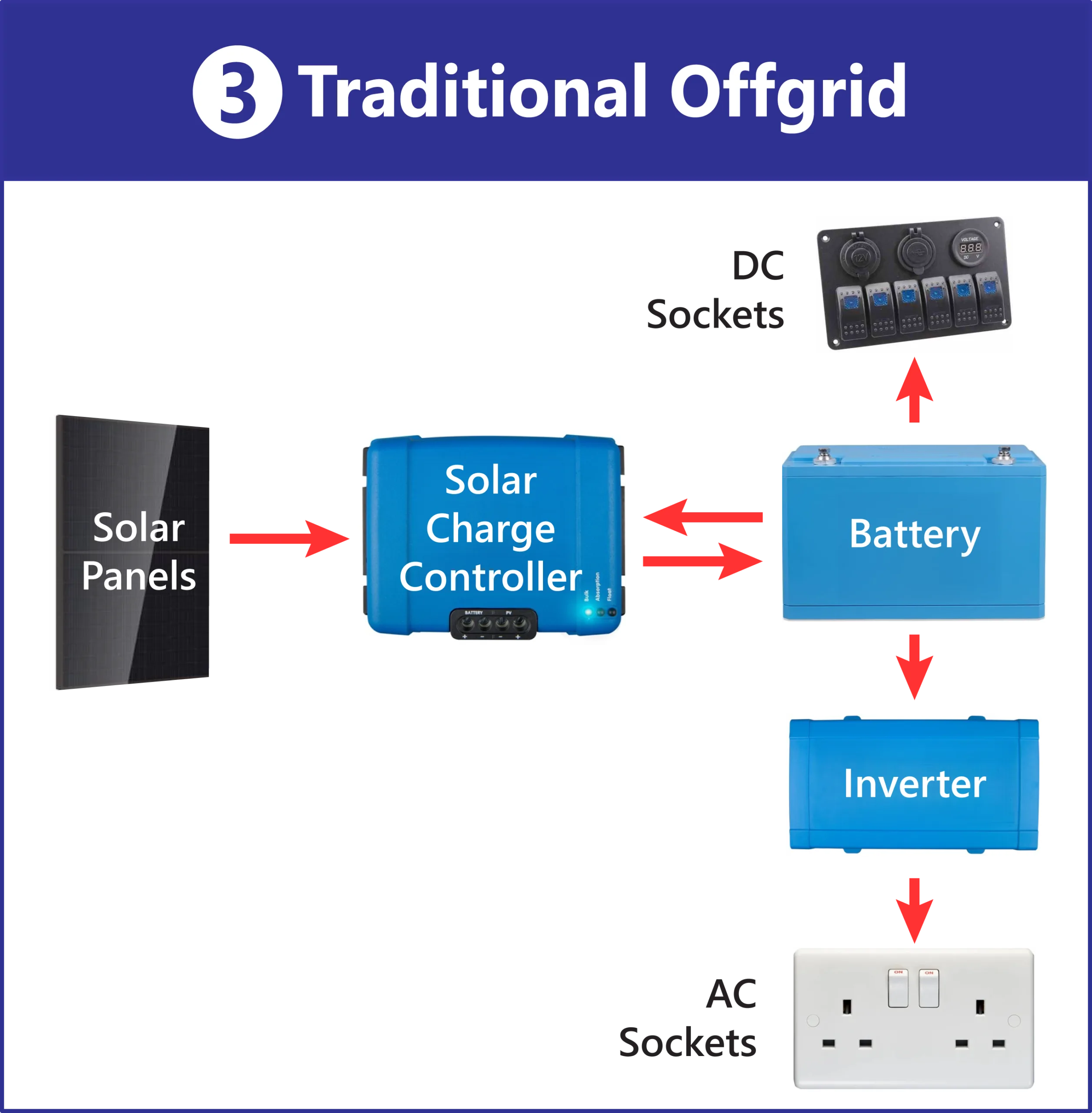
Traditional offgrid systems have a distinct advantage since many devices can run on DC, without the inefficiencies of converting to AC. This makes them very efficient and ideal for smaller installations such as campervans and boats.
DC vs AC coupled battery
Choosing between DC and AC coupled systems is an important decision, so it is useful to know the key differences to empower yourself to make the right decision.
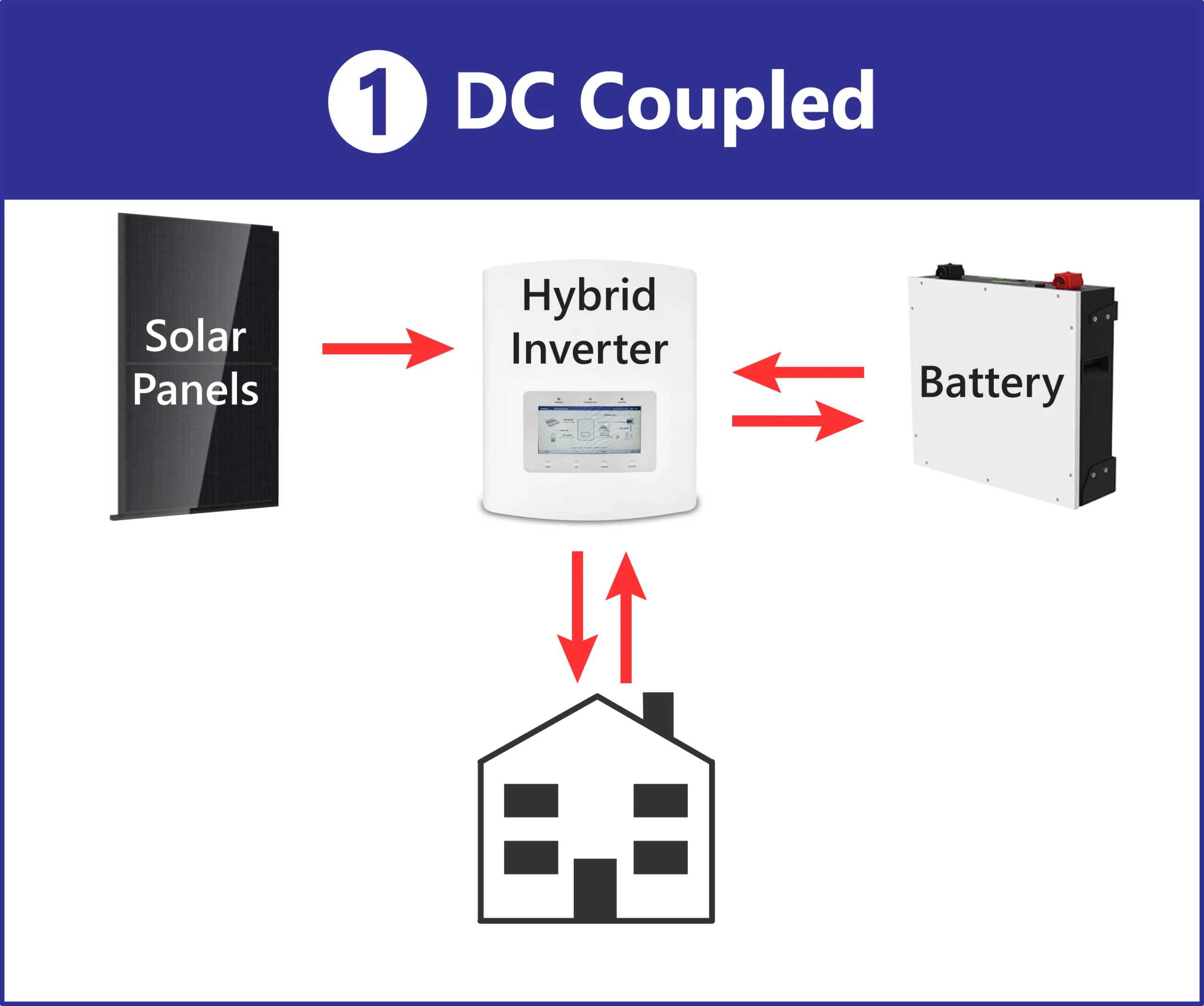
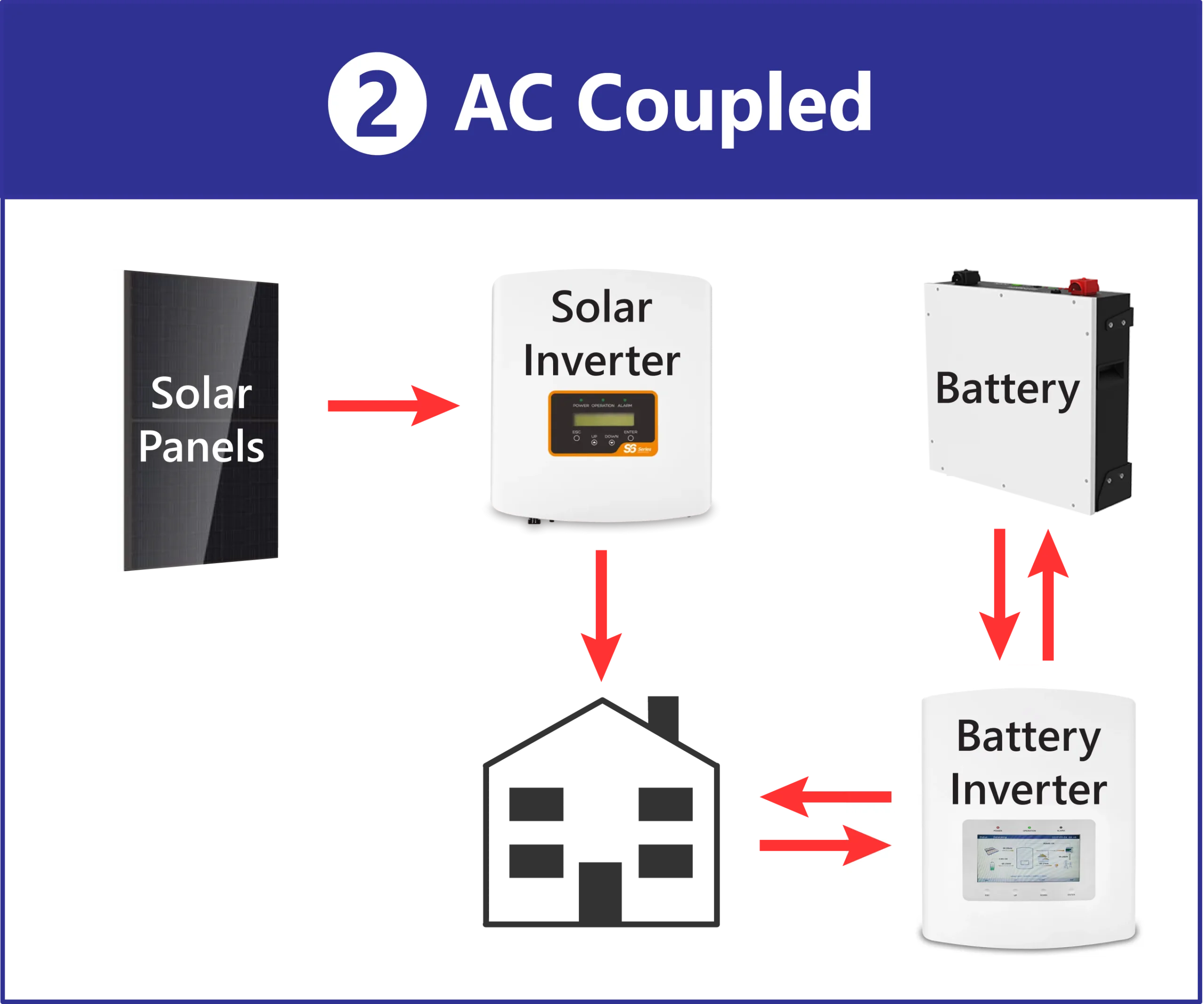
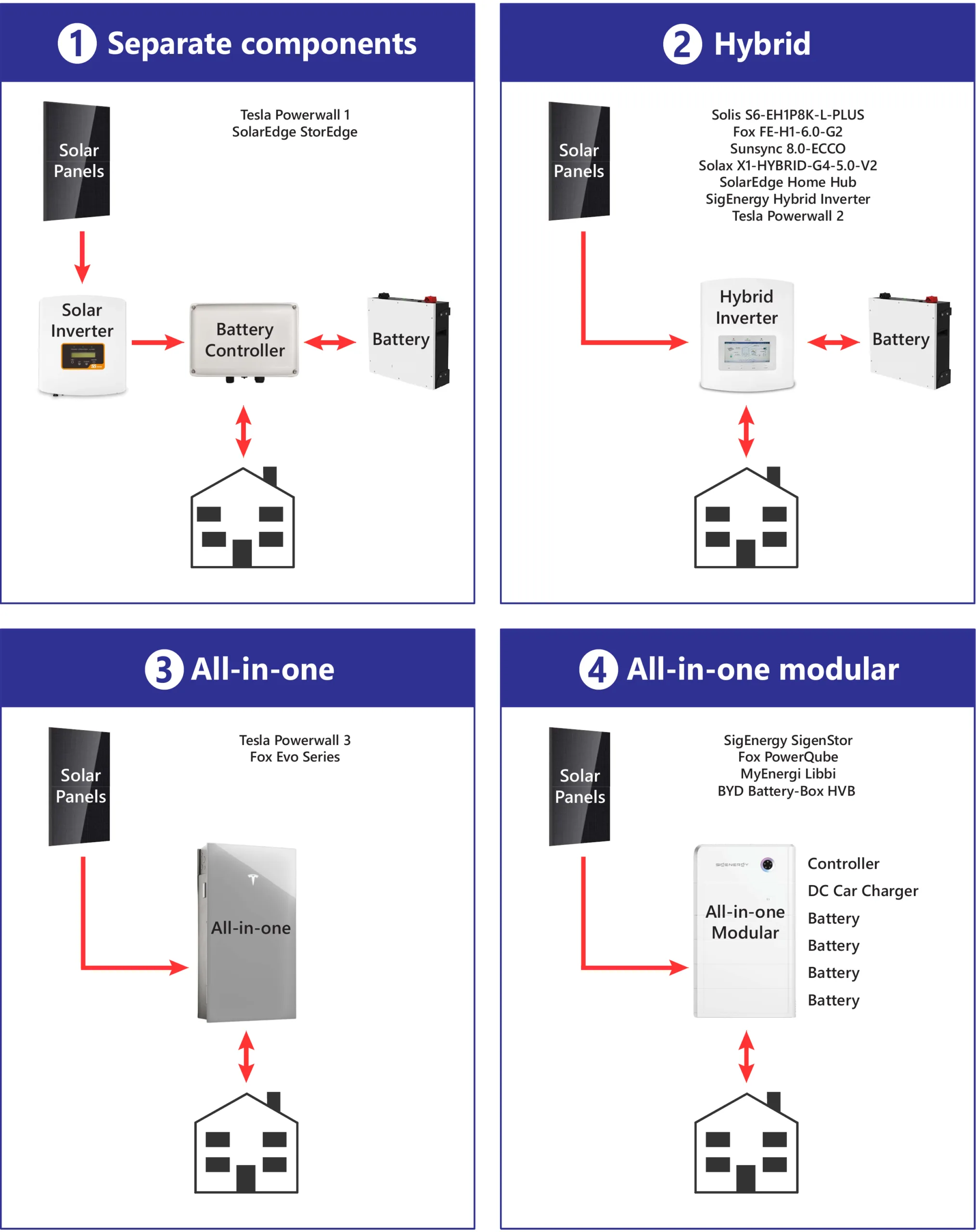
Types of battery systems
There are several types of battery systems suitable for home use. They start with separate components moving to partially integrated systems (hybrid systems) and finally fully integrated systems (all-in-one). All-in-one can also be modular, meaning it is one unit which is made up of many parts. Modular is the latest innovation most companies are moving towards including SigEnergy, SolarEdge, Fox, MyEnergi and BYD.
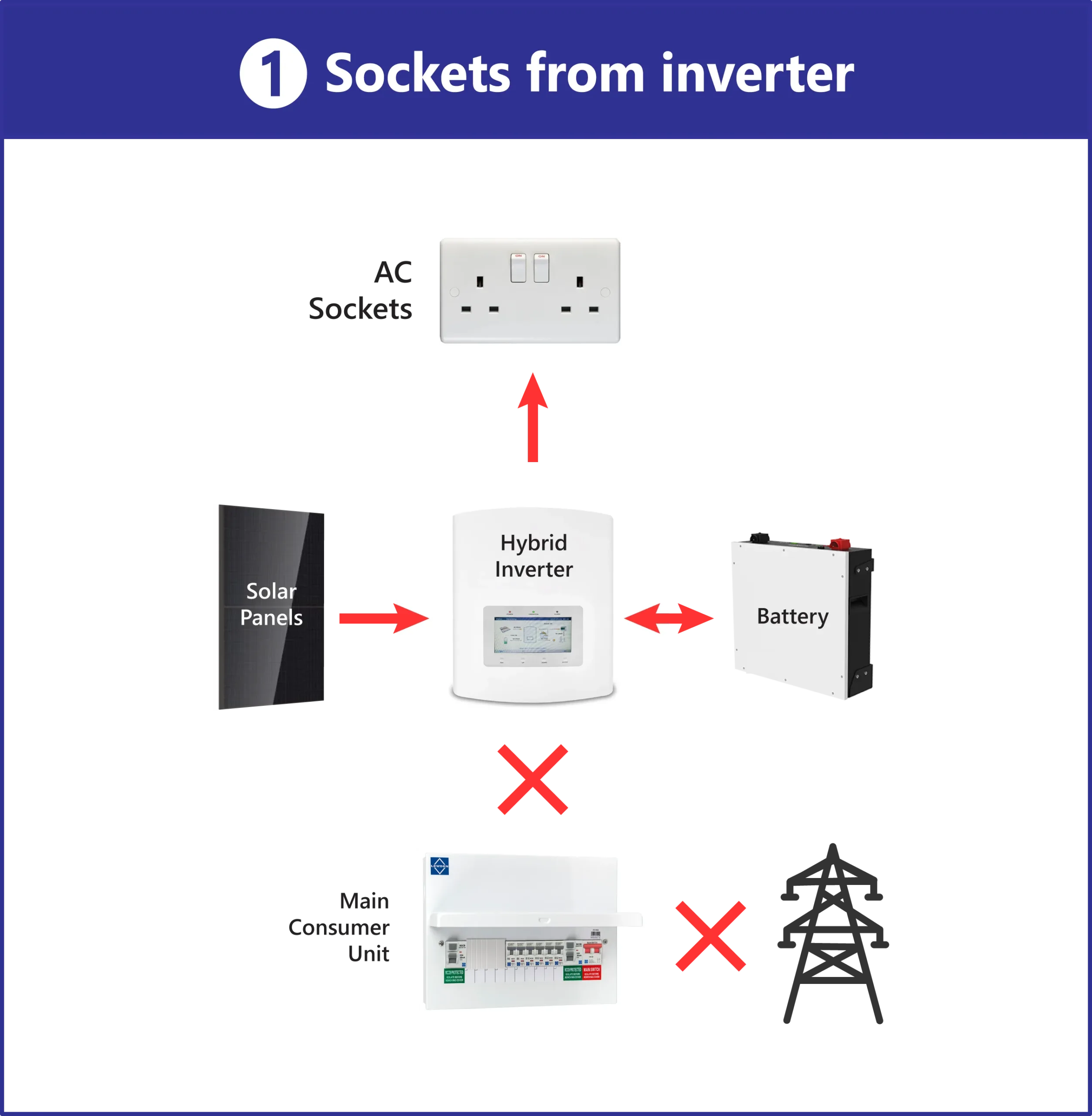
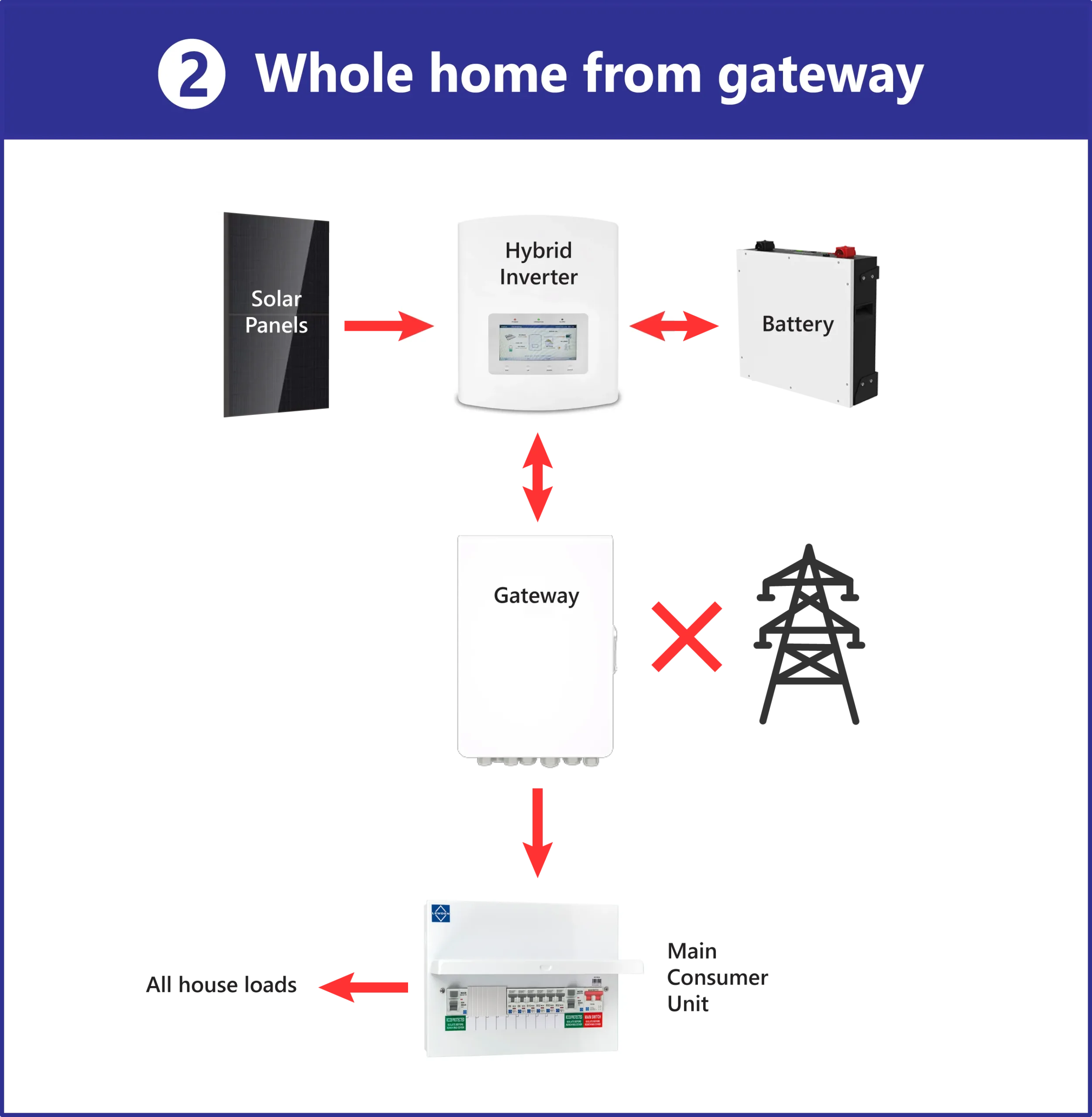
Types of battery backup
In the UK, where the grid is quite reliable, for most people there is little need for battery backup. However, some people might desire battery backup for self-sufficiency and resilience or might live in locations where the grid is less reliable.
Either the inverter or a backup gateway can perform the switch from grid-tied to offgrid (also known as islanding mode).
Types of export restriction
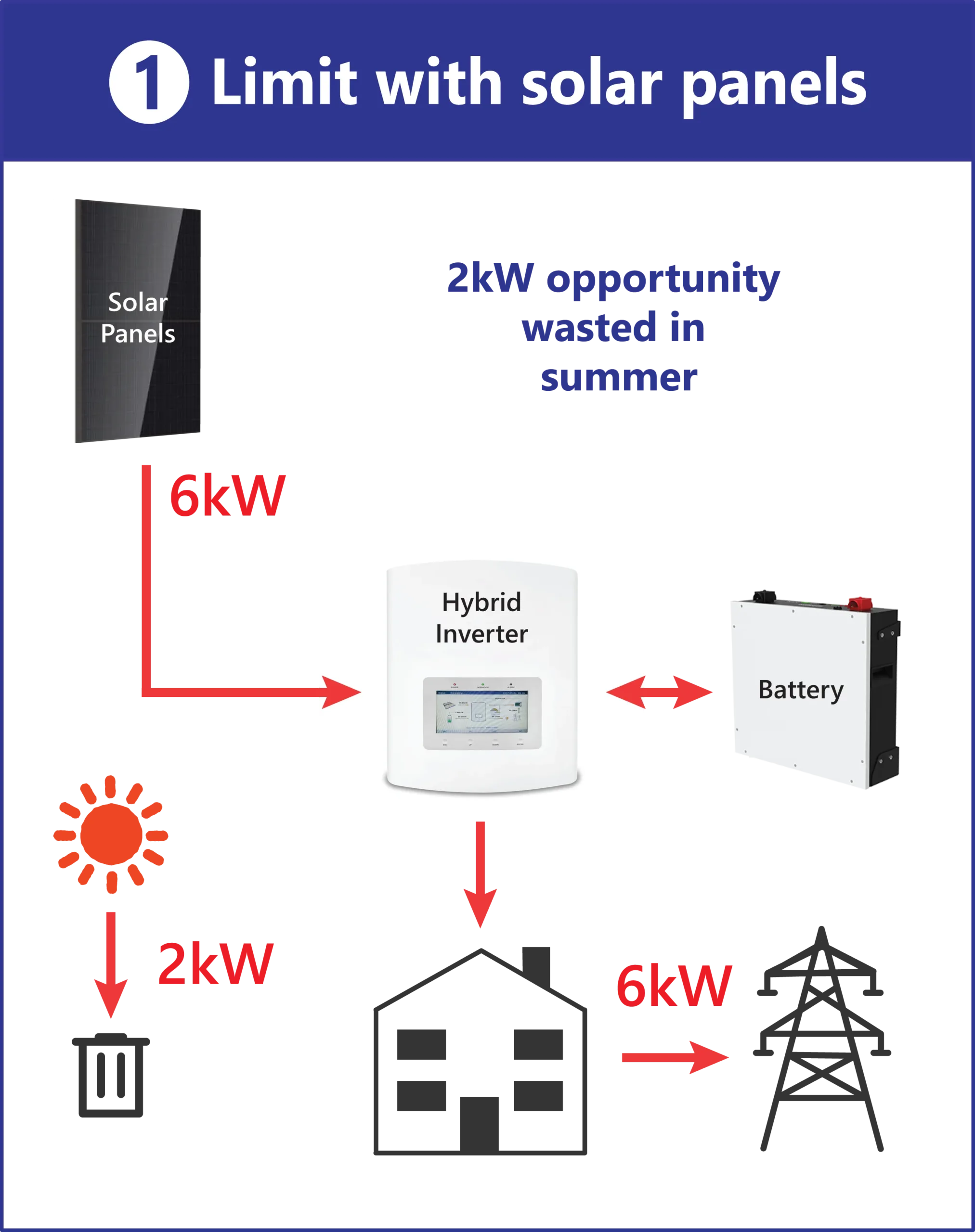
National Grid has imposed a 6kW export restriction so we reduce the size of the solar system to 6kW and don’t benefit from 2kW of potential solar generation in the summer months.
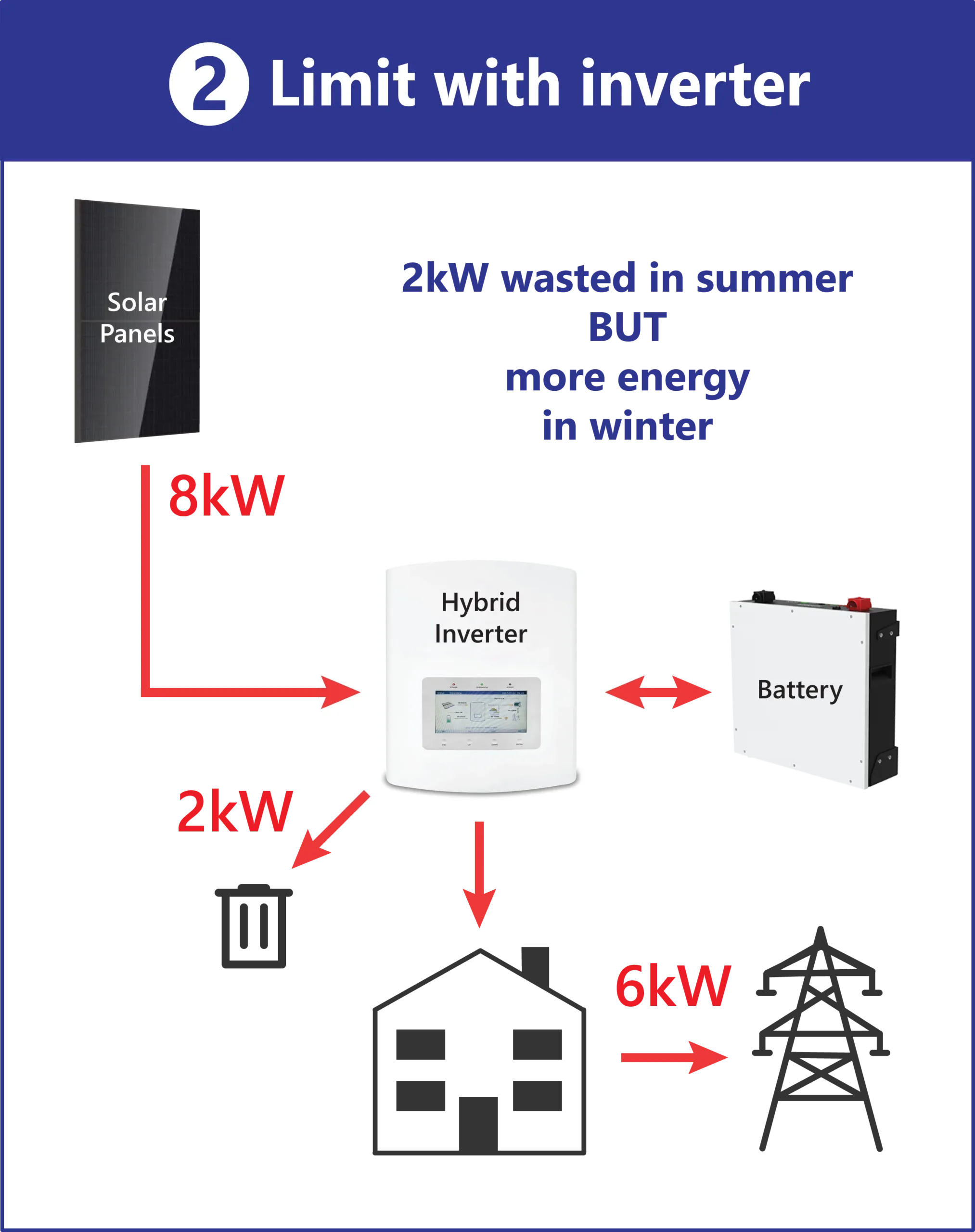
In this solution we install the full 8kW of solar panels; however, since the National Grid has imposed a 6kW export restriction, we reduce the size of the inverter to 6kW. This means the full 8kW of solar can be used most of the time in the home, but in the middle of summer when generation is above 6kW, 2kW is wasted.
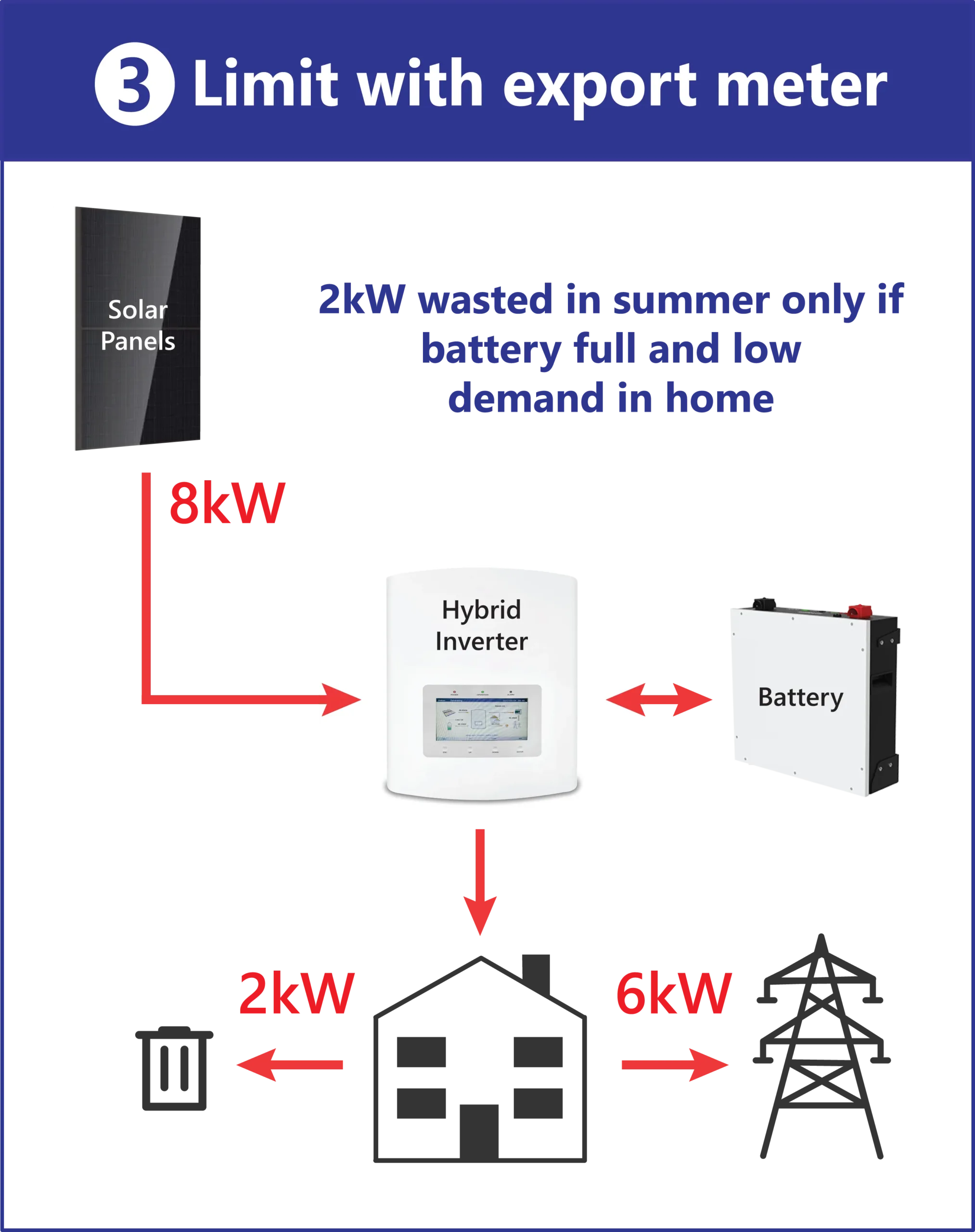
In this solution we install the full 8kW of solar panels and an 8kW inverter. However, since the National Grid has imposed a 6kW export restriction, we install an export meter to ensure no more than 6kW is exported to the grid. This means the full 8kW can be used in the home, charge the battery, charge the EV or heat hot water. In the unlikely event the system is producing the full 8kW and there is no demand 2kW will be wasted and 6kW exported.
This is the best form of export restriction, but can be more expensive to install.
