
SigEnergy Vs Solis/Dyness Home Battery Review

So which is the best battery system: SigEnergy or Solis/Dyness? Consider the features of each system below to work out which features are important to you.
For a quick answer, if you want a less expensive system, go for Solis/Dyness. If you want whole home power cut backup choose SigEnergy. If you want a full Eco System of integrated components and a more user friendly system, choose SigEnergy. If you want a system greater than 20kWh SigEnergy is normally a better choice since it expands more easily.
If you have seen a mistake or believe we have not fairly represented the products, please get in touch.
| Feature | SigEnergy | Solis |
|---|---|---|
| Ecosystem | Winner | |
| Modular | Joint Winner | Joint Winner |
| Charge & Discharge Speed | Winner | |
| Backup Capability | Winner | |
| Compatibility with Octopus Energy Tariffs | Winner | |
| Charges for Artificial Intelligence Mode | Joint Winner | Joint Winner |
| Charge Below Zero | Joint Winner | Joint Winner |
| Efficiency | Winner | |
| App | Winner | |
| Price | Winner | |
| Resilience | Winner | |
| Profitability | Winner |
If you have seen a mistake or believe we have not fairly represented the products, please get in touch.
1. Ecosystem
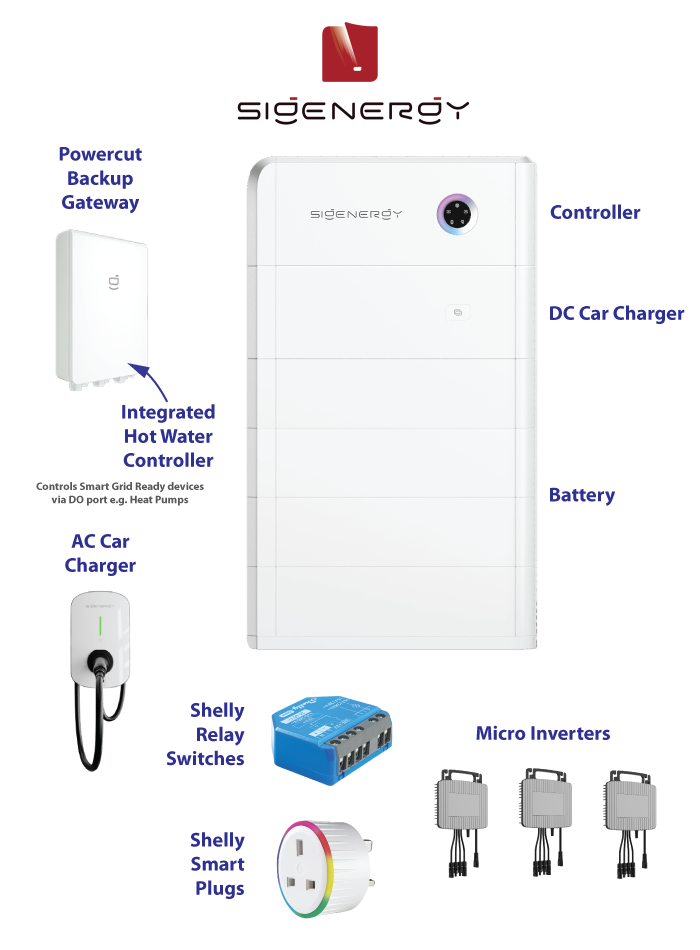
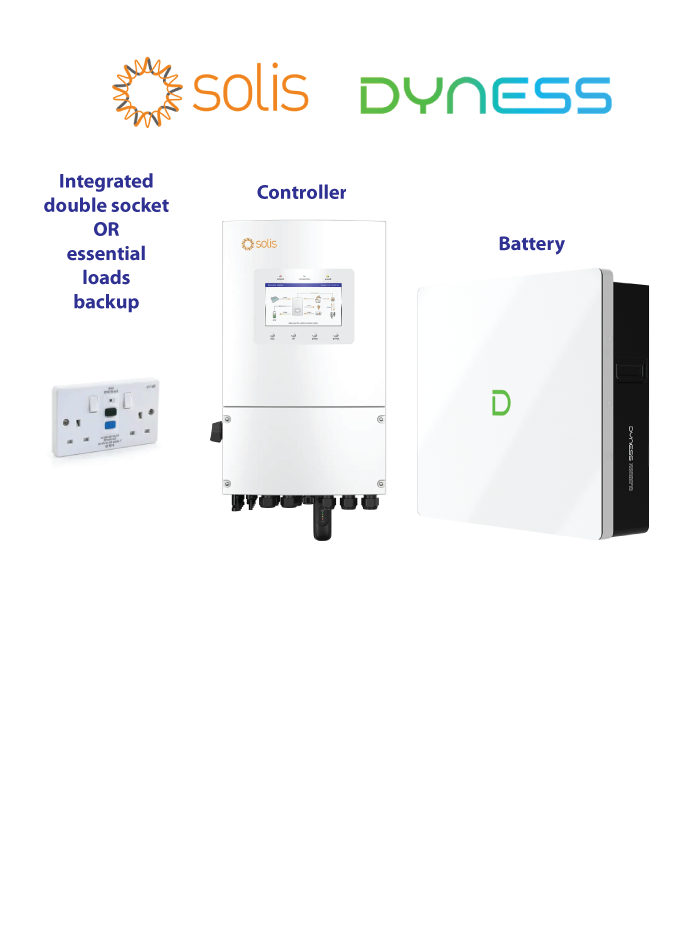
Whilst it does not have its own brand of power diverters it can be paired with the MyEnergi Zappi (car charging) and MyEnergi Eddi (hot water heating). It is also compatible with Tigo optimisers.
It also has integrated essential loads backup which means it can keep your lights, freezer, router and non-electric boiler on during a power cut.
2. Modular
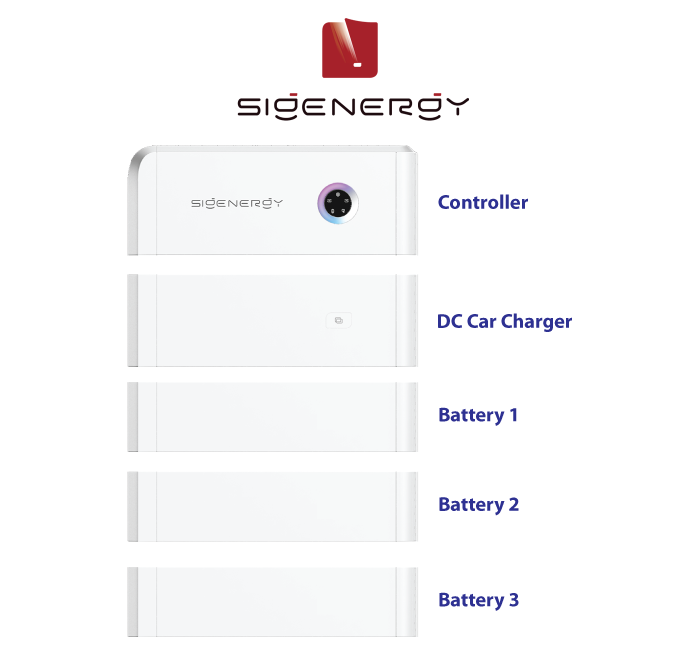
The SigEnergy components are all separate, combining into a neat stack.
The system is scalable and flexible, with any combination of 6kWh, 10kWh and 12kWh battery modules.
If there is an issue with a controller or battery pack, it can be easily replaced – the ultimate solution from an environmental, redundancy and cost perspective.
Scalable
Whilst you can extend your system easily in the future, it makes sense to do this in the first two years of ownership since the batteries degrade over time.

The controller (inverter, rectifier, power cut backup changeover switch and battery management system) is completely separate to the batteries, so all components can be replaced separately.
Scalable
Whilst you can extend if you have a compatible inverter, it needs to be done in the first 6 months of operation.
3. Charge and Discharge Speed
Your charge and discharge speed is determined by the lowest speed of the battery and controller. For example 6 x SigEnergy 10kWh batteries can discharge at 24kW; however, the single phase controller maximum size is 12kW – therefore limiting discharge of the batteries to 12kW.
Charge speed
Charge speed is important if you have a limited charge window, for example if you are on Octopus Go, the cheap electricity window is limited to 5 hours.

Charge Speed
With the optimum configuration, the maximum charge speed is 12kW
Discharge Speed
The discharge speed is also 12kW
SigEnergy controllers can be installed in parallel, but their total output is capped at 12kW.
4. Backup capability
The types of backup power supply are split into two categories depending upon how fast they switch to backup in the event of a power cut.
Uninterrupted Power Supply (UPS) is designed so there is minimal interruption to the power supply when there is a power cut. Customers with sensitive electronic equipment such as computers or medical equipment might require a high quality power supply such as UPS.
Emergency Power Supply (EPS) is typically a little slower to transfer into backup mode and devices such as computers might turn off.
Uninterrupted Power Supply
0 milliseconds changeover speed.
SigEnergy has a market leading speed in its switch to backup mode – well ahead of its competition. It is so fast we have not been able to detect any flicker in lighting and the tests we have performed have shown that computers, running at the time of power supply failure, have not been impacted.
Uninterrupted Power Supply
<4 milliseconds changeover speed.
You could argue they are both joint winners since <10 milliseconds is considered UPS and sufficient for most homes.
5. Compatibility with Octopus Energy Tariffs

6. Charges for Artificial Intelligence Mode
7. Charge Below Zero
To enable charging below 0°C, heating pads need to be installed inside the battery packs. This not only allows charging below 0°C, but is likely to prolong the life of your battery when charging in the 0-10°C range. The disadvantage is energy is used to heat the batteries before charging. Once the cells start to charge they generate their own heat through the charging process. Therefore, a workaround that avoids heating pads is to discharge the battery first to generate heat before charging it.
8. Efficiency
There are many measures of efficiency, but the good one to compare is round trip efficiency – how efficient the system is at charging AND discharging.
9. App useability
Below is the App rating on Google Play.
10. Price
11. Resilience
This is important from an environmental and economic point of view.
In the UK we saw one of the largest solar/battery system manufacturers, GivEnergy, go into administration. With limited stock available to repair the existing systems, failure of the inverter or battery means the system may not be repairable. This is why resilience is an important consideration.
All of the components are from one manufacturer in a similar way to GivEnergy. If the company goes into administration or liquidation it makes the system difficult to repair.
Solis who are known for producing reliable inverters with 20 years experience in the industry. They are one of the largest inverter manufacturers in the world. The hybrid inverter is compatible with over 150 batteries and the battery is compatible with many controllers, making it a resilient solution in the event of failure.
It also has screen based control meaning that it can continue to be controlled if the internet stops working.
12. Profitability
The Solis AI mode is not fully developed and it often performs better in self consumption time-of-use mode.
However, they are constantly improving the software and new releases should be available soon.
13. Other factors to consider
Three phase
In the UK a very small minority of residential homes will have three phase. SigEnergy and Solis both have good three phase systems.
Vehicle to grid (V2G)
This allows your car battery to be used for home energy. Solis do not have a solution. SigEnergy already has a vehicle to grid (V2G) solution with their DC car battery charger.
Backup gateway
SigEnergy has full home backup which can also be set up as essential load backup. Solis has double socket backup and essential loads backup. Essential loads backup means only your lights, freezer, fridge, router and non-electric heating stay on during a power cut – this means your battery is reserved for essential loads rather than all loads.
Warranty
SigEnergy also has a 10 year warranty for most components (excluding the LED light strip which is 2 years). The Gateway has a 5 year warranty and the circuit breakers included have a 2 year warranty. The battery does have a throughput limit which means a certain amount of energy is permitted to be charged and discharged during the warranty period.
Solis has a 5 year warranty on the inverter, but this can be upgraded to 10 years for a low cost. Dyness has a 10 year manufacturer warranty.
